What is Oil Trading? Beginners Should Know WTI and Brent Before the First Trade
What is oil trading? A simple 2026 guide for beginners comparing WTI vs Brent. Learn how to trade tokenized oil on Hyperliquid HIP-3 with no KYC and real USDC withdrawals to Bitkub.
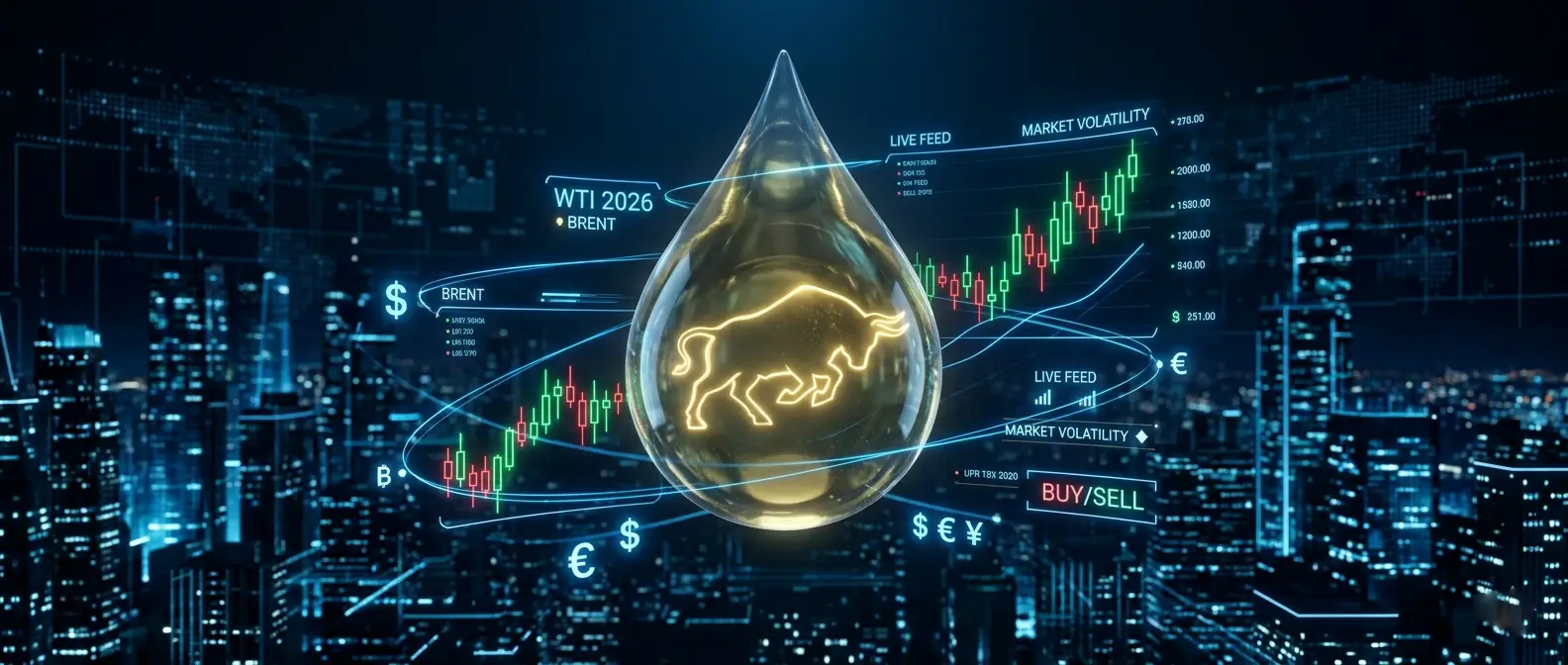
What is Oil Trading?
Oil trading involves buying and selling Crude Oil contracts to profit from price fluctuations. Whether the price goes up or down, you can profit both ways. Simply put, it's about buying low and selling high, or selling high first and buying back lower.
In 2026, oil trading is more accessible than ever. There are both traditional futures contracts and tokenized oil on Hyperliquid (HIP-3), allowing for 24-hour trading without needing a foreign brokerage account.
Amazing Oil Trading Statistics for 2026
- Brent Crude Oil price is around $78-$82 per barrel.
- WTI Crude Oil price is around $73-$77 per barrel.
- Oil Trading Volume on Hyperliquid — Reaching $400-$600 million on peak days (accounting for 40-45% of total HIP-3 volume).
- Open Interest on HIP-3 — Surged past $1.7 billion, with oil being one of the largest markets.
- Thai Tokenized Oil Traders — Increased by over 180% from last year.
Traditional Oil Trading vs. Trading on a DEX
Old-school oil markets (CEX or futures brokers) have several limitations:
- Requires opening an account with a foreign broker and completing KYC.
- Trading is limited to market hours (not 24 hours).
- Funds are held in brokerage accounts, which are not 100% transparently verifiable.
- High fees and limited leverage.
Meanwhile, oil trading on Hyperliquid (HIP-3) is Decentralized:
- Connect your wallet and trade immediately with no KYC required.
- Trade 24/7, including weekends and nights.
- Funds are held in smart contracts; transactions are transparent and verifiable by everyone.
- Up to 50x leverage with very low fees.
Which Oil Can You Trade on Hyperliquid?
Hyperliquid allows trading of two main oil types via the HIP-3 (Community Built Markets) system:
1. Brent Crude Oil (BRENTOIL) — Sourced from the North Sea, this is the primary global price benchmark used in Europe and Asia.
2. WTI Crude Oil (WTI) — West Texas Intermediate, slightly cheaper than Brent, usually represents the US oil market.
Additionally, other commodities like Gold, Gasoline, and Energy Indices are available.
Why Should Thais Trade Oil in 2026?
Most Thais used to think oil trading required huge capital and was complicated, but that has changed.
- Start with Small Amounts — You can purchase fractional contracts.
- Profits in USDC — Withdraw to Bitkub or Thai banks (Kasikorn, SCB) within minutes.
- Use SiamDEX as a Thai Interface — Makes trading as easy as using any other app.
- No KYC — Your funds stay 100% in your own wallet.
Summary — Who is Oil Trading For?
- Beginners who want to try commodity trading with simple explanations.
- Those looking to diversify their portfolio beyond stocks and crypto.
- Traders who enjoy high volatility and the ability to trade 24/7.
- Thais who want to avoid opening international brokerage accounts.
- Anyone wanting to profit from global economic news (wars, OPEC, supply-demand).
Oil trading isn't as difficult as it seems. If you understand just these two—WTI and Brent—and start with a demo account or small investment, 2026 is truly a golden year for beginners in decentralized oil trading.
Study up, then place your first trade with confidence. Good luck!
Written by

SiamDEX's team of DeFi and financial market experts with over 5 years of experience trading crypto and digital assets.
Related Articles
Before You Trade
Level Up Your Knowledge First
Smart traders do their research first. Read our articles and latest news before placing your first trade.
Educational Blog
Learn trading fundamentals to advanced strategies for crypto, stocks, and more.
Latest Market News
Stay updated on crypto, stocks, and macro news to time the market better.
Successful traders spend 80% of their time studying the market and 20% actually trading. Don't rush.
วิธีเทรด
และอีก 200+ รายการ





Assets You Can Trade
 Bitcoin (BTC)
 Ethereum (ETH)
 Solana (SOL)
 Hyperliquid (HYPE)
 Gold (PAXG) (PAXG)
 XRP (XRP)
 Dogecoin (DOGE)
 Fartcoin (FARTCOIN)
 Zcash (ZEC)
 Bittensor (TAO)
 Plasma (XPL)
 Pump.fun (PUMP)
 Pepe (1000x) (KPEPE)
 Sui (SUI)
 Venice Finance (VVV)
 Algorand (ALGO)
 Litentry (LIT)
 Chainlink (LINK)
 Cardano (ADA)
 Monad (MON)
 Jupiter (JUP)
 Ethena (ENA)
 Avalanche (AVAX)
 LayerZero (ZRO)
 Blur (BLUR)
 Ondo Finance (ONDO)
 dogwifhat (WIF)
 Pudgy Penguins (PENGU)
 SPX6900 (SPX)
 Bonk (1000x) (KBONK)
 dYdX (DYDX)
 TRON (TRX)
 Starknet (STRK)
 Story Protocol (IP)
 Render Network (RENDER)
 AIXBT by Virtuals (AIXBT)
 Aerodrome Finance (AERO)
 Just a Chill Guy (CHILLGUY)
 Aave (AAVE)
 BNB (BNB)
 Curve Finance (CRV)
 Monero (XMR)
 NEAR Protocol (NEAR)
 Aster (ASTER)
 Worldcoin (WLD)
 Uniswap (UNI)
 Bitcoin Cash (BCH)
 Sei (SEI)
 Aptos (APT)
 Litecoin (LTC)
 Lido DAO (LDO)
 World Liberty Financial (WLFI)
 Arbitrum (ARB)
 Stellar (XLM)
 Virtuals Protocol (VIRTUAL)
 Official Trump (TRUMP)
 Fetch.ai (ASI) (FET)
 Morpho (MORPHO)
 Hemi Network (HEMI)
 Polkadot (DOT)
 0G (ZeroGravity) (0G)
 DoubleZero (2Z)
 ACE (Fusionist) (ACE)
 ApeCoin (APE)
 Axie Infinity (AXS)
 Bio Protocol (BIO)
 BLAST (BLAST)
 BOOK OF MEME (BOME)
 Conflux (CFX)
 Brent (BRENTOIL)
 GOLD (GOLD)
 SILVER (SILVER)
 Nvidia (NVDA)
 Apple (AAPL)
 Tesla (TSLA)
 S&P 500 (SP500)
 WTI (CL) (CL)
 Nasdaq 100 (XYZ100)
 SanDisk (Western Digital) (SNDK)
 Circle (CRCL)
 Micron Technology (MU)
 Intel (INTC)
 Natural Gas (NATGAS)
 EUR (EUR)
 Platinum (PLATINUM)
 Coinbase (COIN) (COIN)
 iShares MSCI South Korea ETF (EWY)
 JPY (JPY)
 Alphabet (Google) (GOOGL)
 Robinhood (HOOD)
 Palantir (PLTR)
 Copper (COPPER)
 MicroStrategy (MSTR)
 Meta (Facebook) (META)
 Microsoft (MSFT)
 CrowdStrike (CRWV)
 Amazon (AMZN)
 SK Hynix (SKHX)
 Netflix (NFLX)
 Advanced Micro Devices (AMD)
 Eli Lilly (LLY)
 ARM Holdings (USAR)
 TSMC (TSM)
 Oracle (ORCL)
 iShares MSCI Japan ETF (EWJ)
 Rivian (RIVN)
 Alibaba (BABA)
 Samsung Electronics (SMSN)