Thai Diesel Surges Past 47 Baht: What are the Impacts?
Thai diesel prices skyrocket from under 30 Baht to 47.74 Baht/liter. The Fuel Fund is 49,403 million Baht in deficit, and inflation risks hitting 4.56%. A deep dive into stock sector impacts and response plans.
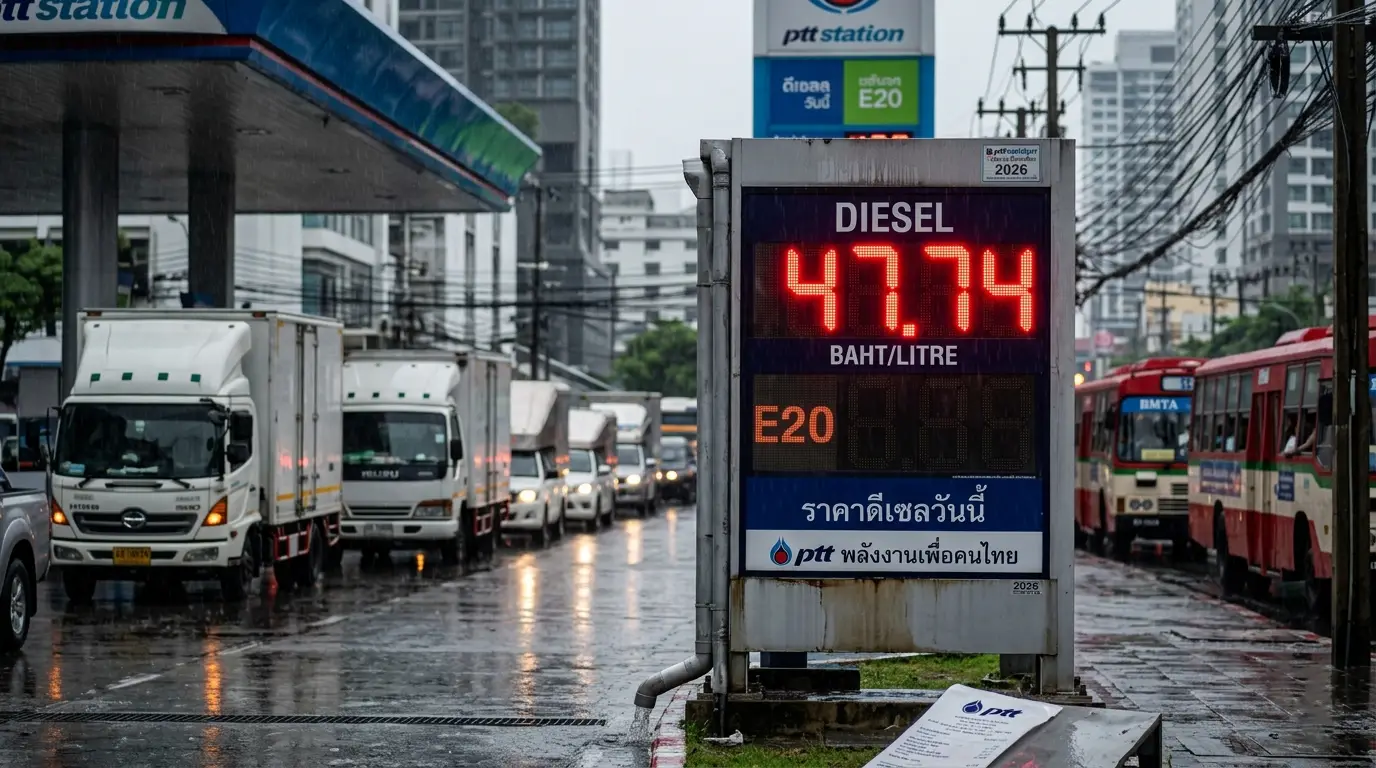
If you feel like your daily living expenses have become unusually expensive over the past month, you are not mistaken. Diesel prices, the "main lifeline" of the Thai transport system, have jumped exponentially since the Iran war broke out in late February, with no signs of stopping.
Key Figures — From Under 30 Baht to Over 47 Baht
According to data from Bangkok Insight, the price of Diesel B7 currently (as of April 3, 2026) stands at 47.74 Baht/liter. Before the Iran conflict erupted on February 28, the price was below 30 Baht/liter. There are also reports of a further increase of 2.80 Baht/liter coming this Sunday, April 5, which means diesel will hit 50 Baht/liter within this week. The Fuel Fund is currently in deficit by 49,403 million Baht and must continue subsidizing diesel by over 1,000–1,400 million Baht daily. Furthermore, according to a report by MM Thailand, diesel prices at refineries have surged by 138% since the closure of the Strait of Hormuz.
Which Stock Sectors are Affected?
According to analysis from CGSI (CGS International Securities), the impact is clearly divided into two sides:
- Negatively Impacted (Underperform): Transportation and Logistics (costs surging 20–25%), Retail and Consumer Goods (costs passed through to product prices), Food and Agriculture (transport costs for raw materials and products), Tourism and Airlines (fuel costs), and Real Estate and Construction (material and transport costs).
- Beneficiaries: Upstream energy like PTTEP (revenue rising with global oil prices), Refineries (OR, IRPC, TOP) as crack spreads often improve during high oil price periods, and the Renewable Energy sector as it becomes more attractive compared to expensive fossil fuels.
Impact on the Cost of Living for Thais
According to Bangkok Biz News, the Federation of Thai Industries (FTI) warns that overall product prices are likely to rise by 8–10% within this April once old stocks are depleted and operators face full new costs. The University of the Thai Chamber of Commerce estimates inflation could surge to 4.56%. Immediate impacts felt by the public include fare hikes for songthaews/minibuses, the price of prepared meals, prices in supermarkets and fresh markets, and electricity bills for the May–August period, which will rise in line with natural gas prices.
What is the Government Doing?
According to reports from InfoQuest, Deputy Prime Minister Ekniti is preparing to propose a fuel price restructuring plan to the Cabinet on April 6. Concepts include capping refinery margins at no more than 3 Baht and potentially removing transport costs, insurance, and War Premiums from the price structure. The goal is to reduce the cost of living for the public before the Songkran festival.
Response Plan for Citizens and Investors
- Serious Energy Saving: Plan your travels, combine trips, and consider using public transport as diesel is likely to continue rising in the short term.
- Prepare for Utilities and Living Costs: Increase your household budget by 8–10% for food and essential goods.
- Stock Investors: Avoid transport and retail stocks in the short term. Consider upstream energy stocks like PTTEP and high-dividend stocks with strong cash flow.
- Investors Seeking to Hedge: For those wanting to trade oil directly, SiamDEX on Hyperliquid HIP-3 allows for trading BRENTOIL and CL (WTI) 24/7 in both Long and Short positions without going through foreign brokers.
- Emergency Cash Reserves: During a crisis, you should maintain at least 3–6 months of emergency reserves. Do not let your investment portfolio consume this portion.
Conclusion — What to Watch Next
The Cabinet resolution on April 6 regarding the oil price structure is the most critical variable this week. If the government can successfully push down refinery margins, pump prices could drop by 2–4 Baht/liter. However, if global oil prices remain high due to the Iran war, such reductions may only be a temporary relief rather than a root-cause solution.
⚠️ This article compiles information for decision-making purposes only and is not financial or investment advice. Situations change rapidly; please DYOR and consult experts before making any decisions.
Before You Trade
Level Up Your Knowledge First
Smart traders do their research first. Read our articles and latest news before placing your first trade.
Educational Blog
Learn trading fundamentals to advanced strategies for crypto, stocks, and more.
Latest Market News
Stay updated on crypto, stocks, and macro news to time the market better.
Successful traders spend 80% of their time studying the market and 20% actually trading. Don't rush.
Assets You Can Trade
 Bitcoin (BTC)
 Ethereum (ETH)
 Solana (SOL)
 Hyperliquid (HYPE)
 Gold (PAXG) (PAXG)
 XRP (XRP)
 Dogecoin (DOGE)
 Fartcoin (FARTCOIN)
 Zcash (ZEC)
 Bittensor (TAO)
 Plasma (XPL)
 Pump.fun (PUMP)
 Pepe (1000x) (KPEPE)
 Sui (SUI)
 Venice Finance (VVV)
 Algorand (ALGO)
 Litentry (LIT)
 Chainlink (LINK)
 Cardano (ADA)
 Monad (MON)
 Jupiter (JUP)
 Ethena (ENA)
 Avalanche (AVAX)
 LayerZero (ZRO)
 Blur (BLUR)
 Ondo Finance (ONDO)
 dogwifhat (WIF)
 Pudgy Penguins (PENGU)
 SPX6900 (SPX)
 Bonk (1000x) (KBONK)
 dYdX (DYDX)
 TRON (TRX)
 Starknet (STRK)
 Story Protocol (IP)
 Render Network (RENDER)
 AIXBT by Virtuals (AIXBT)
 Aerodrome Finance (AERO)
 Just a Chill Guy (CHILLGUY)
 Aave (AAVE)
 BNB (BNB)
 Curve Finance (CRV)
 Monero (XMR)
 NEAR Protocol (NEAR)
 Aster (ASTER)
 Worldcoin (WLD)
 Uniswap (UNI)
 Bitcoin Cash (BCH)
 Sei (SEI)
 Aptos (APT)
 Litecoin (LTC)
 Lido DAO (LDO)
 World Liberty Financial (WLFI)
 Arbitrum (ARB)
 Stellar (XLM)
 Virtuals Protocol (VIRTUAL)
 Official Trump (TRUMP)
 Fetch.ai (ASI) (FET)
 Morpho (MORPHO)
 Hemi Network (HEMI)
 Polkadot (DOT)
 0G (ZeroGravity) (0G)
 DoubleZero (2Z)
 ACE (Fusionist) (ACE)
 ApeCoin (APE)
 Axie Infinity (AXS)
 Bio Protocol (BIO)
 BLAST (BLAST)
 BOOK OF MEME (BOME)
 Conflux (CFX)
 Brent (BRENTOIL)
 GOLD (GOLD)
 SILVER (SILVER)
 Nvidia (NVDA)
 Apple (AAPL)
 Tesla (TSLA)
 S&P 500 (SP500)
 WTI (CL) (CL)
 Nasdaq 100 (XYZ100)
 SanDisk (Western Digital) (SNDK)
 Circle (CRCL)
 Micron Technology (MU)
 Intel (INTC)
 Natural Gas (NATGAS)
 EUR (EUR)
 Platinum (PLATINUM)
 Coinbase (COIN) (COIN)
 iShares MSCI South Korea ETF (EWY)
 JPY (JPY)
 Alphabet (Google) (GOOGL)
 Robinhood (HOOD)
 Palantir (PLTR)
 Copper (COPPER)
 MicroStrategy (MSTR)
 Meta (Facebook) (META)
 Microsoft (MSFT)
 CrowdStrike (CRWV)
 Amazon (AMZN)
 SK Hynix (SKHX)
 Netflix (NFLX)
 Advanced Micro Devices (AMD)
 Eli Lilly (LLY)
 ARM Holdings (USAR)
 TSMC (TSM)
 Oracle (ORCL)
 iShares MSCI Japan ETF (EWJ)
 Rivian (RIVN)
 Alibaba (BABA)
 Samsung Electronics (SMSN)