Iran War: How Does It Impact Oil, Gold, and Crypto?
The US-Iran conflict pushes oil prices up by 50%, with Thai diesel exceeding 47 Baht. Gold prices drop unexpectedly while Bitcoin stands firm. Deep dive into the impact across all assets with a strategy guide for Thais.
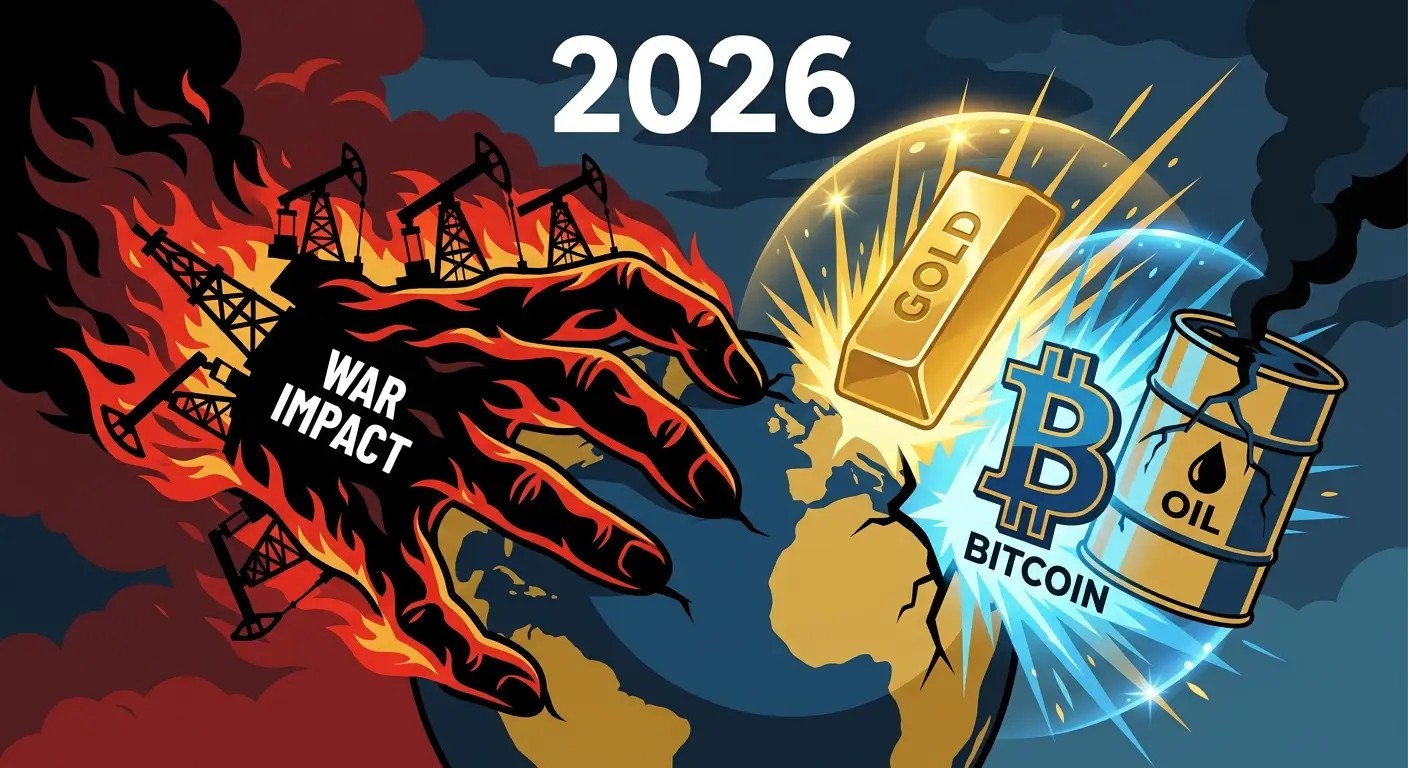
Since February 28, 2026, when the U.S. and Israel launched military operations against Iran, the world has not been the same. Specifically, energy prices are directly impacting the lives of Thai people. This article summarizes what is happening, what is being affected, and what we should do right now.
Latest Situation — The Numbers You Need to Know
According to reports from Bangkok Biz News, the U.S.-Iran war has entered its 34th day. President Trump continues to signal threats of attacking Iranian energy infrastructure in the next 2-3 weeks if the situation does not resolve. The Strait of Hormuz, through which roughly 20% of the world’s oil passes, remains under control. The consequences are as follows:
- WTI crude oil surged over 11% to $111.54/barrel.
- Brent crude oil surpassed $109/barrel.
- Dubai crude reached a peak of $137/barrel in late March.
- The IEA states that this is the most severe oil supply crisis in history, worse than the 1970s crisis.
Oil — The Most Direct and Fastest Impact
For Thais, gas station prices have adjusted upward multiple times. According to data from Thai PBS, current prices (as of April 3, 2026) are: Diesel B7 at 47.74 Baht/liter and Gasoline 95 at 43.95 Baht/liter. This is significant considering that before the war ignited, diesel was below 30 Baht/liter. There are also reports that diesel will rise by another 2.80 Baht/liter this Sunday, April 5. The Fuel Fund is currently over 49,403 million Baht in deficit and must continue subsidizing diesel at over 1,000 million Baht per day, meaning this burden will fall on the public in the long run.
Gold — The Most Misunderstood Market Fact
Many expected the war to push gold prices up, but the reality is the opposite. According to Newsweek, gold has dropped over 20% since the war began. The primary reason is that soaring oil prices have fueled inflation fears, leading the market to expect that the Fed will not cut interest rates. With high interest rates, gold—which has no yield—becomes less attractive. This is compounded by a strengthening Dollar and massive sell-offs in gold ETFs. However, don’t lose interest in gold just yet; Goldman Sachs and J.P. Morgan still target 2026 year-end gold prices at $5,400-$6,300/ounce, viewing this decline as a temporary correction. Currently, gold is around $4,677/ounce, which is still much higher than last year’s price.
Bitcoin and Crypto — Standing Firmer Than Expected
Surprisingly, Bitcoin has outperformed gold during this period. According to 24/7 Wall St., BTC is holding steady around $67,000 amidst market chaos and has shown less volatility than many other assets. Another interesting point for traders, according to Yahoo Finance, is that Hyperliquid is one of the few platforms allowing the trading of oil, gold, and global assets 24/7 even when traditional markets are closed on holidays. This proved vital during the war when news broke late at night or over the weekend.
How Does This Affect Thais?
According to Mitihoon, Asia Plus Securities estimates that every 1 Baht increase in diesel drags Thai GDP down by 0.02%. If the war persists beyond 2 months, the Thai economy might grow by less than 1% and risk entering a recession. The immediate impacts Thais will feel include higher transportation costs leading to more expensive consumer goods, electricity bills for the May-August period likely surging, and higher business costs pressuring employment. The Monetary Policy Committee is expected to maintain interest rates at 1.0%, keeping savings returns low.
Response Plan for Thais — Actionable Now
- Reduce Fuel Consumption: Plan travel efficiently by combining trips and consider working from home if possible, as diesel prices are likely to continue rising.
- Watch Electricity Usage: Prepare for more expensive electricity bills during the summer; reduce the use of AC and high-power appliances.
- Reserve Emergency Cash: During a crisis, you should have at least 3-6 months of emergency reserves in an instantly accessible location.
- Consider Trading Related Assets: For investors who understand the risks, Oil (CL, BRENTOIL) and Gold (GOLD) on SiamDEX via Hyperliquid HIP-3 allow 24/7 trading for both Long and Short positions based on the situation, unlike gold shops that only benefit from upward movements.
- Avoid Risky Stock Sectors: Transport, logistics, and retail sectors are heavily impacted, while upstream energy groups like PTTEP may still perform reasonably well.
Conclusion — What to Monitor Next?
Keep an eye on three main issues. First, the situation at the Strait of Hormuz: if it opens, oil prices drop; if it stays closed, prices surge. Second, peace negotiations, which the UN and 40 other countries are currently pushing for. Third, the Fed’s stance in the April 28-29 meeting regarding how they will handle energy-driven inflation. Situations change rapidly; follow news from Bangkok Biz News and Thai PBS regularly.
⚠️ This article is a compilation of information for decision-making purposes only and is not investment advice. Geopolitical situations involve very high uncertainty; please DYOR and assess your own risks before making any decisions.
Before You Trade
Level Up Your Knowledge First
Smart traders do their research first. Read our articles and latest news before placing your first trade.
Educational Blog
Learn trading fundamentals to advanced strategies for crypto, stocks, and more.
Latest Market News
Stay updated on crypto, stocks, and macro news to time the market better.
Successful traders spend 80% of their time studying the market and 20% actually trading. Don't rush.
Assets You Can Trade
 Bitcoin (BTC)
 Ethereum (ETH)
 Solana (SOL)
 Hyperliquid (HYPE)
 Gold (PAXG) (PAXG)
 XRP (XRP)
 Dogecoin (DOGE)
 Fartcoin (FARTCOIN)
 Zcash (ZEC)
 Bittensor (TAO)
 Plasma (XPL)
 Pump.fun (PUMP)
 Pepe (1000x) (KPEPE)
 Sui (SUI)
 Venice Finance (VVV)
 Algorand (ALGO)
 Litentry (LIT)
 Chainlink (LINK)
 Cardano (ADA)
 Monad (MON)
 Jupiter (JUP)
 Ethena (ENA)
 Avalanche (AVAX)
 LayerZero (ZRO)
 Blur (BLUR)
 Ondo Finance (ONDO)
 dogwifhat (WIF)
 Pudgy Penguins (PENGU)
 SPX6900 (SPX)
 Bonk (1000x) (KBONK)
 dYdX (DYDX)
 TRON (TRX)
 Starknet (STRK)
 Story Protocol (IP)
 Render Network (RENDER)
 AIXBT by Virtuals (AIXBT)
 Aerodrome Finance (AERO)
 Just a Chill Guy (CHILLGUY)
 Aave (AAVE)
 BNB (BNB)
 Curve Finance (CRV)
 Monero (XMR)
 NEAR Protocol (NEAR)
 Aster (ASTER)
 Worldcoin (WLD)
 Uniswap (UNI)
 Bitcoin Cash (BCH)
 Sei (SEI)
 Aptos (APT)
 Litecoin (LTC)
 Lido DAO (LDO)
 World Liberty Financial (WLFI)
 Arbitrum (ARB)
 Stellar (XLM)
 Virtuals Protocol (VIRTUAL)
 Official Trump (TRUMP)
 Fetch.ai (ASI) (FET)
 Morpho (MORPHO)
 Hemi Network (HEMI)
 Polkadot (DOT)
 0G (ZeroGravity) (0G)
 DoubleZero (2Z)
 ACE (Fusionist) (ACE)
 ApeCoin (APE)
 Axie Infinity (AXS)
 Bio Protocol (BIO)
 BLAST (BLAST)
 BOOK OF MEME (BOME)
 Conflux (CFX)
 Brent (BRENTOIL)
 GOLD (GOLD)
 SILVER (SILVER)
 Nvidia (NVDA)
 Apple (AAPL)
 Tesla (TSLA)
 S&P 500 (SP500)
 WTI (CL) (CL)
 Nasdaq 100 (XYZ100)
 SanDisk (Western Digital) (SNDK)
 Circle (CRCL)
 Micron Technology (MU)
 Intel (INTC)
 Natural Gas (NATGAS)
 EUR (EUR)
 Platinum (PLATINUM)
 Coinbase (COIN) (COIN)
 iShares MSCI South Korea ETF (EWY)
 JPY (JPY)
 Alphabet (Google) (GOOGL)
 Robinhood (HOOD)
 Palantir (PLTR)
 Copper (COPPER)
 MicroStrategy (MSTR)
 Meta (Facebook) (META)
 Microsoft (MSFT)
 CrowdStrike (CRWV)
 Amazon (AMZN)
 SK Hynix (SKHX)
 Netflix (NFLX)
 Advanced Micro Devices (AMD)
 Eli Lilly (LLY)
 ARM Holdings (USAR)
 TSMC (TSM)
 Oracle (ORCL)
 iShares MSCI Japan ETF (EWJ)
 Rivian (RIVN)
 Alibaba (BABA)
 Samsung Electronics (SMSN)