How to Trade Oil Online 2026: The Complete Guide
How to trade WTI and Brent oil online in 2026 without opening a broker account. Profit from both bull and bear markets, trade 24/7 via SiamDEX, and withdraw as Baht instantly.
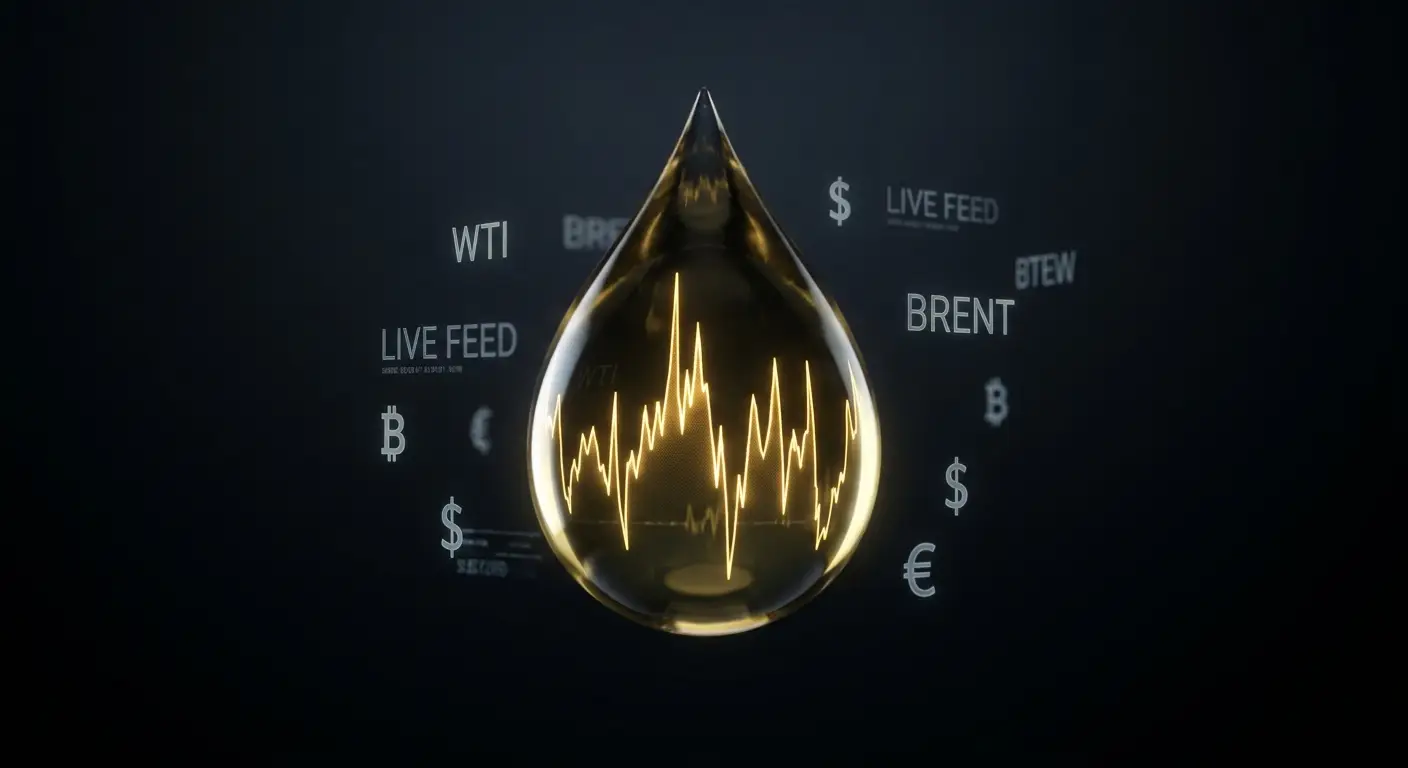
What is oil trading and why is everyone interested?
When talking about investing in oil, many might imagine having to buy physical oil drums or opening complex international broker accounts. However, in 2026, you can trade oil online very easily without holding a single actual drop of oil.
Online oil trading is betting on whether the price of oil will go up or down through CFD (Contract for Difference) or Perpetual Futures. If you think the price will rise, you Long; if you think it will fall, you Short. Your profit or loss depends on whether the price moves in the correct direction.
Why is it interesting? Because oil is a high-volatility asset with massive trading volume that reacts quickly to geopolitical news. For instance, during the Iran war in 2026, the WTI price surged from around $60 to hit $117 within a few weeks. Anyone who went Long from the start could have seen doubled profits.
Figures you must know about the oil market
The oil market is one of the largest commodity markets in the world. It is quite fascinating:
- Trading Volume: WTI crude oil on NYMEX has an average volume of over 1 million contracts per day, valued at over $100 billion daily.
- Strait of Hormuz: Approximately 20% of the world's oil passes through here daily, making it a geopolitical hotspot that everyone must watch.
- Price in 2026: WTI swung within a range of $54-$117 per barrel within a single year, demonstrating very high volatility.
- Impact on Thailand: Thailand imports over 80% of its oil consumption, meaning global oil prices directly impact diesel and all domestic goods.
With this level of volatility, the oil market presents an opportunity for traders who can correctly read the direction.
How is oil trading different from buying stocks or crypto?
Many are more familiar with buying stocks or crypto. Let's see how oil differs:
- Driven more by Macro: Oil prices depend on OPEC+, geopolitics, EIA stock figures, and global economic conditions, unlike stocks which depend on company performance.
- Trade 24/5 (or 24/7 on DEX): Oil futures markets are open almost all the time, and on SiamDEX, it is open 24/7 including holidays. If news breaks late at night, you can trade immediately.
- Higher Leverage: Oil futures markets often allow high leverage, which amplifies both profits and losses.
- Volatile patterns: Oil tends to respond to OPEC+ news, weekly EIA inventory disclosures, and geopolitical news, allowing traders to plan based on the news calendar.
- No Dividends: Unlike stocks, oil has no dividends; profit comes solely from price changes.
The 2 types of oil you must know — WTI and Brent
Before trading, you must understand the two main benchmarks used by traders worldwide:
WTI (West Texas Intermediate), or what is called CL on SiamDEX, is the primary US benchmark. It is produced in Texas, is high quality, easy to refine, and serves as the reference for the American market. The current price is around $92-97/barrel.
Brent Crude, or BRENTOIL on SiamDEX, is the global benchmark used more widely across the world. It comes from the North Sea and the price is usually slightly higher than WTI by about $2-5 (called the Brent Premium). Thailand imports most of its crude oil from the Middle East, which primarily references Brent prices.
On SiamDEX, you can trade both CL (WTI) and BRENTOIL via HIP-3 using USDC as total collateral, so there is no confusion with currency conversion.
How to trade oil on SiamDEX step-by-step
Let's get practical. It’s not as complex as you might think:
Step 1 — Prepare USDC
- Buy USDC from Bitkub using Thai Baht (USDC/THB).
- Withdraw USDC to MetaMask on the Arbitrum network (you will need a little ETH for gas).
Step 2 — Connect and Deposit
- Go to siamdex.com and connect your MetaMask.
- Click Deposit to transfer USDC into Hyperliquid.
Step 3 — Select the Oil Asset
- Click the + button in the Asset Selector and choose the HIP-3 tab.
- Search for CL (WTI) or BRENTOIL.
- Add them to your watchlist.
Step 4 — Analyze and Open a Position
- Watch the charts and follow OPEC+ news, EIA figures, and Middle East situations.
- Choose Long (if you think oil will go up) or Short (if you think it will go down).
- Set leverage (2-5x is recommended for beginners as oil is very volatile).
- Set a Stop Loss every time — this is very important, no exceptions.
- Click Place Order.
Step 5 — Monitor and Manage your Position
- View real-time PnL in the Positions tab.
- Adjust your Stop Loss as profits increase (trailing stop).
- Close the position when your target is reached.
Connecting with Thais — Why is SiamDEX the best fit?
There are several ways for Thais to trade oil, such as through forex brokers like XM, Exness, or via SiamDEX. However, SiamDEX has clear advantages for Thai users:
- No KYC: Every forex broker requires ID submission, face scans, and waiting 1-3 days for verification. SiamDEX allows you to connect MetaMask and trade instantly.
- Easy Baht Withdrawals: Profit as USDC → Withdraw to MetaMask → Transfer to Bitkub → Sell for Baht. The whole process takes less than an hour.
- Thai UI: It is the only platform that fully supports the Thai language in every section; no need to translate confusing forex terminology.
- Trade 24/7: Oil news often breaks late at night or on holidays. Normal brokers might be closed, but SiamDEX never closes.
- Low Fees: 0.035% per trade, which is cheaper than forex brokers that charge a combined spread + commission of 0.05-0.1%.
- No Swap Fees: Forex brokers charge an overnight fee for every night a position is held, but SiamDEX uses a Funding Rate which is usually much lower.
Benefits of trading oil in 2026
Why is 2026 such an interesting time for oil trading?
- Highest Volatility in Years: The Iran war caused WTI to swing from $60 to $117 and back down to $87 within weeks. This kind of volatility is an opportunity for traders.
- Clear and Trackable News: The EIA news calendar (every Wednesday), OPEC+ meetings, and Middle East news are all clear catalysts that you can prepare for.
- Correlation with other assets: Higher oil = higher inflation = interest rates might rise = pressure on crypto. Understanding this macro allows for trading multiple markets simultaneously.
- Easier Access than ever: No need to open foreign broker accounts, no KYC, no need to transfer money out of the country. Just having MetaMask is enough to trade.
Risks to know before trading oil
This article must be honest about risks because oil is very high risk:
- Extreme Volatility: Oil prices can move 10-15% in a single day. Using high leverage can lead to rapid liquidation.
- Gap Risk: News often breaks outside market hours; prices can gap through your Stop Loss.
- OPEC+ Surprises: Decisions by OPEC+ often happen suddenly and are difficult to predict.
- Use Low Leverage First: For beginners, we recommend leverage no higher than 3x because oil is sometimes even more volatile than certain cryptos.
Summary — Who is it for?
- People who already follow geopolitical news and want to profit from oil movements.
- People who understand basic macroeconomics such as OPEC+, inflation, and Fed interest rates.
- People who want to diversify their portfolio away from crypto and stocks by adding commodities.
- Traders who need to hedge energy costs, such as transport business owners worried about expensive fuel.
- People who don't want to go through KYC or deal with the hassle of foreign brokers.
Not suitable for:
- Absolute beginners who have never traded anything; it is better to start with BTC or ETH where volatility is easier to manage.
- People who don't have time to follow the news, as oil moves heavily based on it.
- People looking for passive income, as oil requires active management.
If you're ready, come try trading oil at siamdex.com. Connect your MetaMask, select CL or BRENTOIL from HIP-3, and start your first position today. No KYC, no documents, open 24/7 with no holidays.
Written by

SiamDEX's team of DeFi and financial market experts with over 5 years of experience trading crypto and digital assets.
Related Articles
Before You Trade
Level Up Your Knowledge First
Smart traders do their research first. Read our articles and latest news before placing your first trade.
Educational Blog
Learn trading fundamentals to advanced strategies for crypto, stocks, and more.
Latest Market News
Stay updated on crypto, stocks, and macro news to time the market better.
Successful traders spend 80% of their time studying the market and 20% actually trading. Don't rush.
วิธีเทรด
และอีก 200+ รายการ



Assets You Can Trade
 Bitcoin (BTC)
 Ethereum (ETH)
 Solana (SOL)
 Hyperliquid (HYPE)
 Gold (PAXG) (PAXG)
 XRP (XRP)
 Dogecoin (DOGE)
 Fartcoin (FARTCOIN)
 Zcash (ZEC)
 Bittensor (TAO)
 Plasma (XPL)
 Pump.fun (PUMP)
 Pepe (1000x) (KPEPE)
 Sui (SUI)
 Venice Finance (VVV)
 Algorand (ALGO)
 Litentry (LIT)
 Chainlink (LINK)
 Cardano (ADA)
 Monad (MON)
 Jupiter (JUP)
 Ethena (ENA)
 Avalanche (AVAX)
 LayerZero (ZRO)
 Blur (BLUR)
 Ondo Finance (ONDO)
 dogwifhat (WIF)
 Pudgy Penguins (PENGU)
 SPX6900 (SPX)
 Bonk (1000x) (KBONK)
 dYdX (DYDX)
 TRON (TRX)
 Starknet (STRK)
 Story Protocol (IP)
 Render Network (RENDER)
 AIXBT by Virtuals (AIXBT)
 Aerodrome Finance (AERO)
 Just a Chill Guy (CHILLGUY)
 Aave (AAVE)
 BNB (BNB)
 Curve Finance (CRV)
 Monero (XMR)
 NEAR Protocol (NEAR)
 Aster (ASTER)
 Worldcoin (WLD)
 Uniswap (UNI)
 Bitcoin Cash (BCH)
 Sei (SEI)
 Aptos (APT)
 Litecoin (LTC)
 Lido DAO (LDO)
 World Liberty Financial (WLFI)
 Arbitrum (ARB)
 Stellar (XLM)
 Virtuals Protocol (VIRTUAL)
 Official Trump (TRUMP)
 Fetch.ai (ASI) (FET)
 Morpho (MORPHO)
 Hemi Network (HEMI)
 Polkadot (DOT)
 0G (ZeroGravity) (0G)
 DoubleZero (2Z)
 ACE (Fusionist) (ACE)
 ApeCoin (APE)
 Axie Infinity (AXS)
 Bio Protocol (BIO)
 BLAST (BLAST)
 BOOK OF MEME (BOME)
 Conflux (CFX)
 Brent (BRENTOIL)
 GOLD (GOLD)
 SILVER (SILVER)
 Nvidia (NVDA)
 Apple (AAPL)
 Tesla (TSLA)
 S&P 500 (SP500)
 WTI (CL) (CL)
 Nasdaq 100 (XYZ100)
 SanDisk (Western Digital) (SNDK)
 Circle (CRCL)
 Micron Technology (MU)
 Intel (INTC)
 Natural Gas (NATGAS)
 EUR (EUR)
 Platinum (PLATINUM)
 Coinbase (COIN) (COIN)
 iShares MSCI South Korea ETF (EWY)
 JPY (JPY)
 Alphabet (Google) (GOOGL)
 Robinhood (HOOD)
 Palantir (PLTR)
 Copper (COPPER)
 MicroStrategy (MSTR)
 Meta (Facebook) (META)
 Microsoft (MSFT)
 CrowdStrike (CRWV)
 Amazon (AMZN)
 SK Hynix (SKHX)
 Netflix (NFLX)
 Advanced Micro Devices (AMD)
 Eli Lilly (LLY)
 ARM Holdings (USAR)
 TSMC (TSM)
 Oracle (ORCL)
 iShares MSCI Japan ETF (EWJ)
 Rivian (RIVN)
 Alibaba (BABA)
 Samsung Electronics (SMSN)